
Concrete Steps for Sloped Maryland Yards: What Actually Lasts
The Hill Isn't the Problem. The Path Is.
Half the yards in Anne Arundel County run downhill toward something — a creek, a dock, a lower patio, a detached garage, a street that sits eight feet below the front door. Most homeowners live with it for years. They cut a dirt track into the grass, stack a few railroad ties, drop in some flagstone, and every spring the whole thing slides another inch toward the bottom.
Poured concrete steps end that cycle for good, but only when the work below grade is done right. This guide walks through what makes a set of exterior steps last through Maryland winters: how they're built, what the finish options actually do, how long the job takes, and what we look at when we walk a sloped lot. You can also browse finished work in our project galleries.
Get a Free Estimate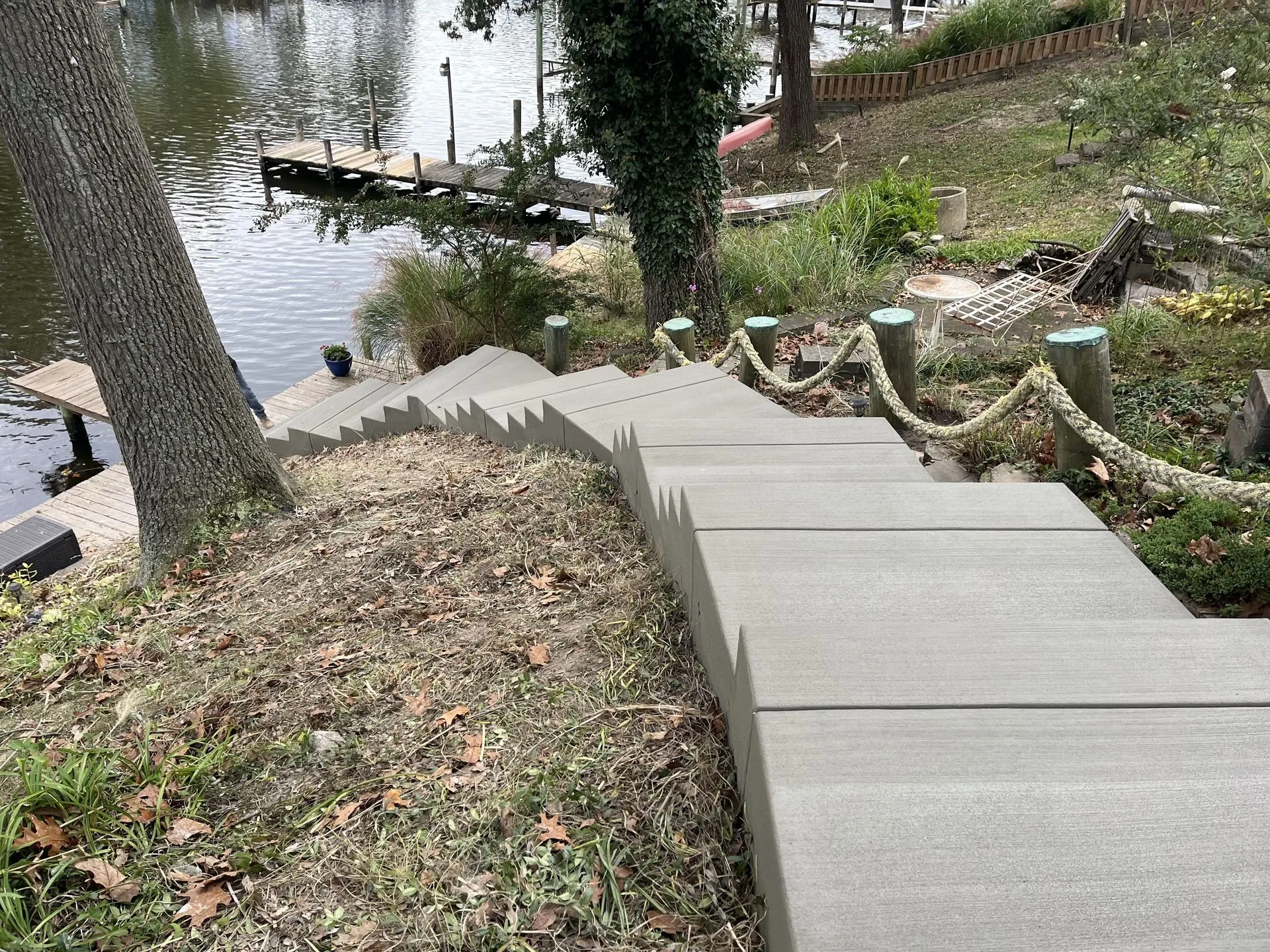
Five Things to Settle Before You Pour Steps on a Slope
Every sloped-lot project comes down to the same handful of decisions. Get these right and the steps outlive the deck, the fence, and probably the roof. Jump to whichever one you're weighing.
A Slope Needs Steps, Not a Shortcut
The temporary fixes all fail the same way. Railroad ties rot from the bottom and pull away from their spikes. Loose flagstone set on soil rocks underfoot the first time the ground saturates. Mulch paths wash into the lawn every heavy rain, and a worn dirt track turns into a slide by November. None of it fails dangerously on day one — it fails gradually, until someone carrying groceries or a cooler puts a foot wrong on a wet tread.
Poured steps solve it because the whole run becomes one connected structure instead of a stack of separate pieces. Consistent rise and tread depth is the safety feature that matters most: your foot learns the rhythm on the second step and stops thinking about it. A run built into a hillside also stabilizes the grade around it, which is why steps and a hardscape wall so often get built as one project rather than two.
"Jose and his crew were very professional and incredibly efficient in completing the concrete job that they did for me. I'm very happy with my new driveway, sidewalk and porch."
See our profileThe Part You'll Never See Does the Work
Every set of steps that fails early failed below the surface. The sequence that holds up starts with excavation down to undisturbed soil — not the loose fill that got pushed around when the house was built — with the base of the run bearing below the frost line so the bottom tread can't heave. Then compacted crushed stone across the full footprint, formwork braced hard enough to hold the pour without bellying out, and steel reinforcement tying the treads and the landing into one piece.
Drainage is the other half. Water that collects behind a riser has nowhere to go when it freezes, and that expansion is what lifts and cracks a run of steps. We grade the subbase to shed water, keep stone behind the risers where the slope demands it, and pick a mix suited to exterior work in a freeze-thaw climate. If you want the underlying detail on mixes and cure windows, we've covered how long concrete takes to cure and the fundamentals on our poured concrete page.
"I contacted Jose on a Monday and the work was started two days later and finished in two days. The price was excellent. I highly recommend BRIJO Concrete Solutions."
See our profile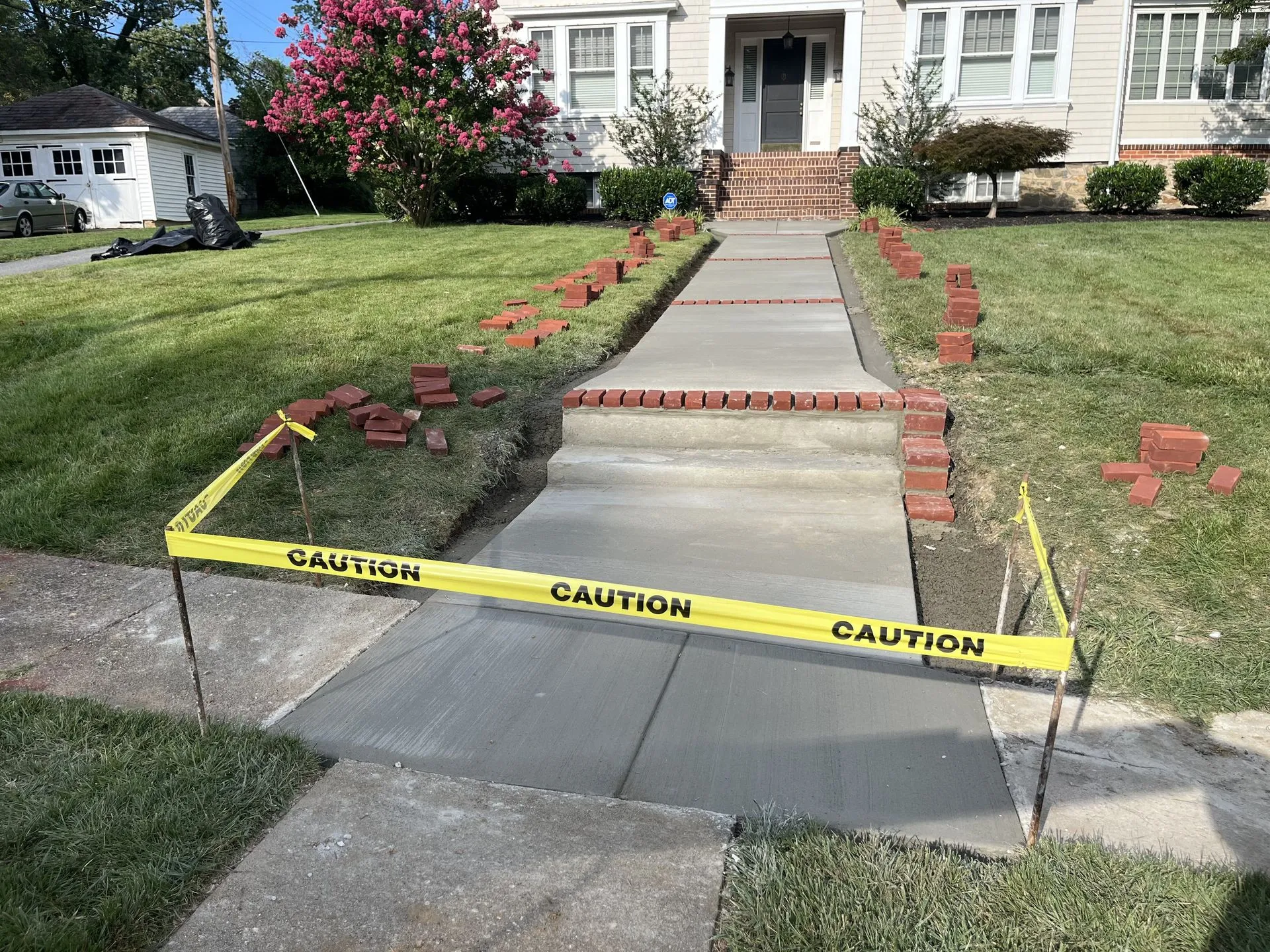
Broom Finish, Brick Border, or Stamped
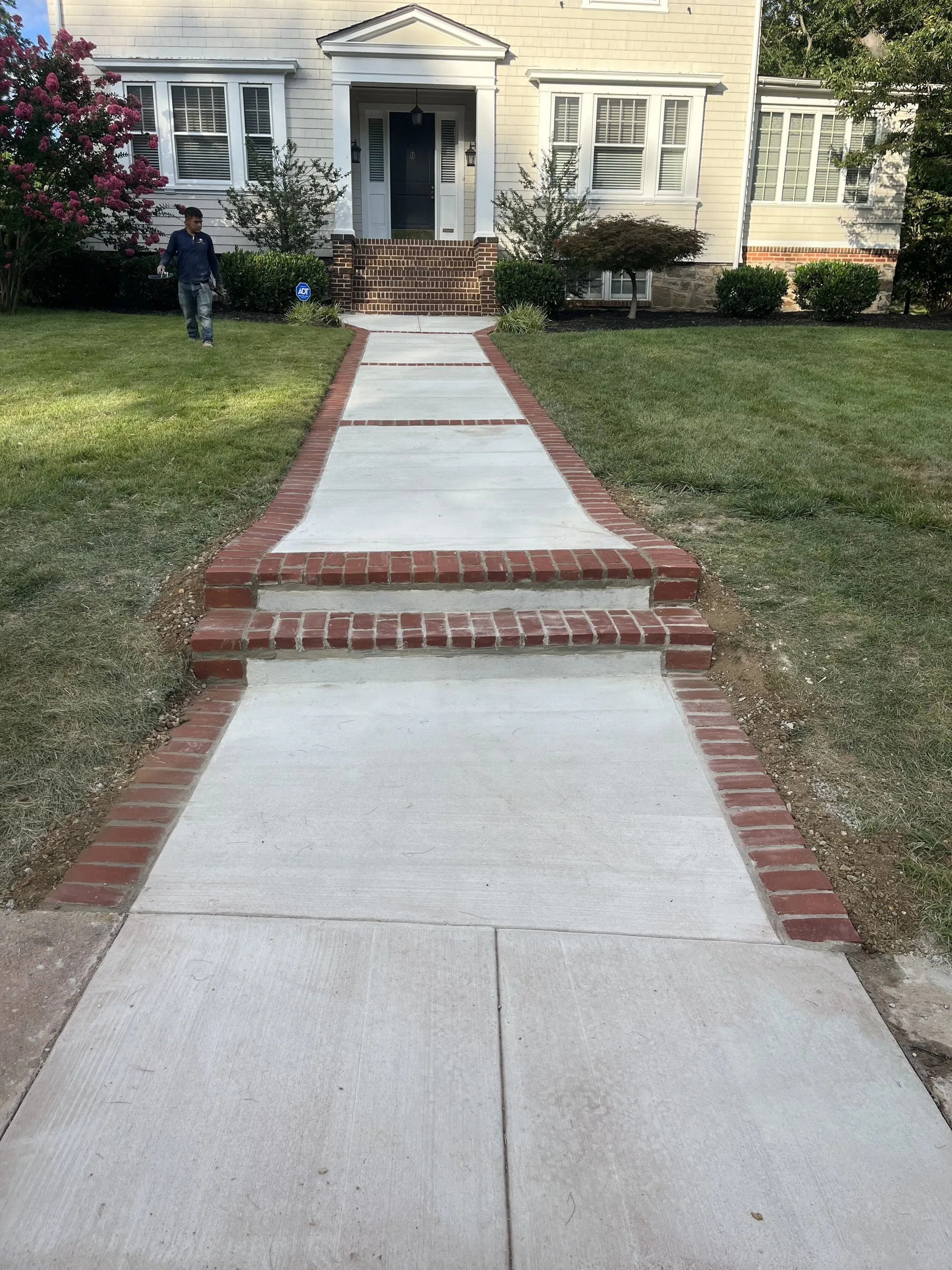
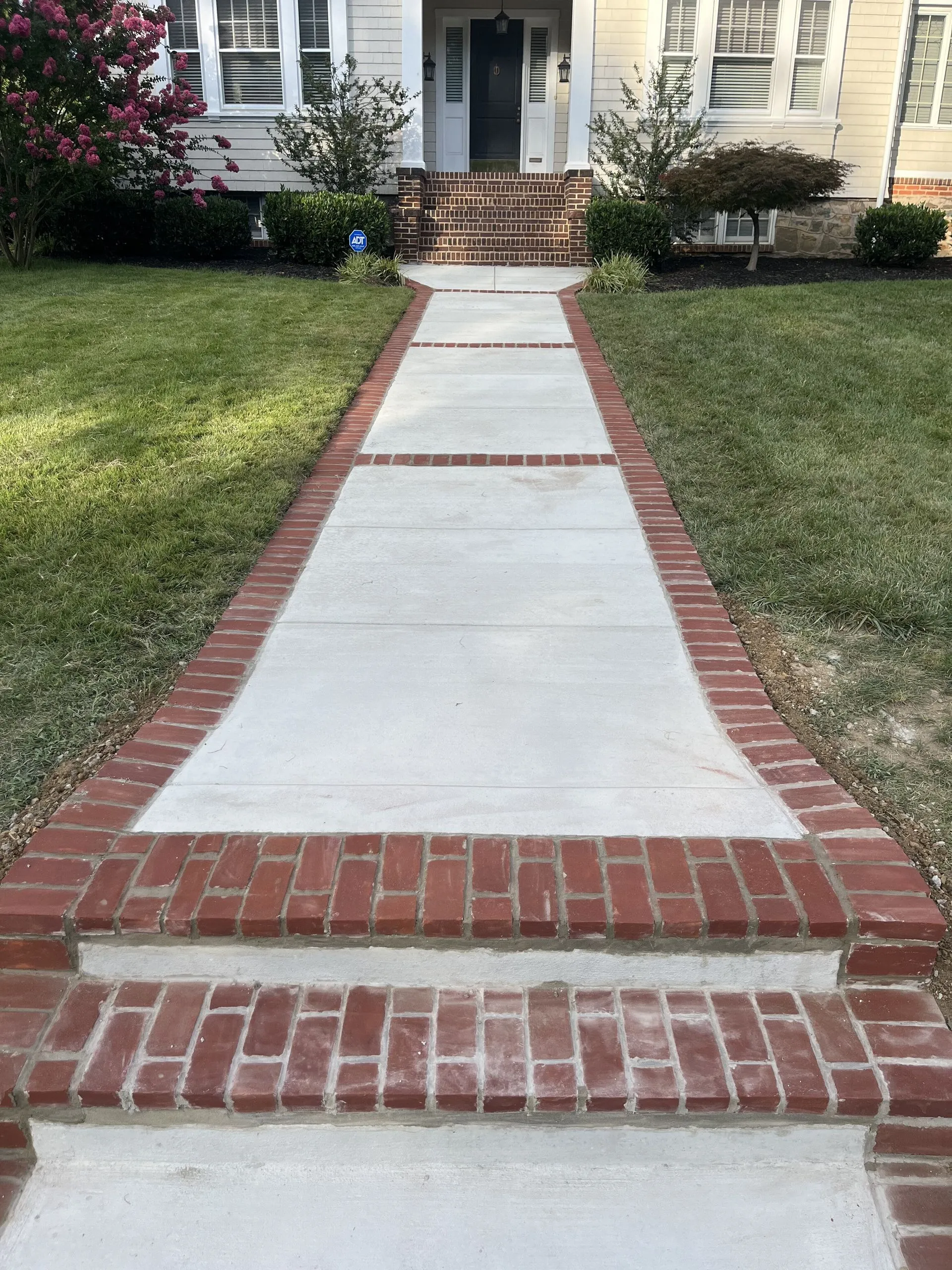
Traction comes first on exterior steps, and a broom finish is still the most reliable way to get it — the fine ridges give wet shoes something to bite, and they don't wear smooth in a few winters the way a troweled surface does. From there it's a question of how much the steps should stand out. A red brick border along the treads and landing is the detail homeowners ask us for most: it frames the run, ties the steps to a brick house, and costs far less than you'd guess.
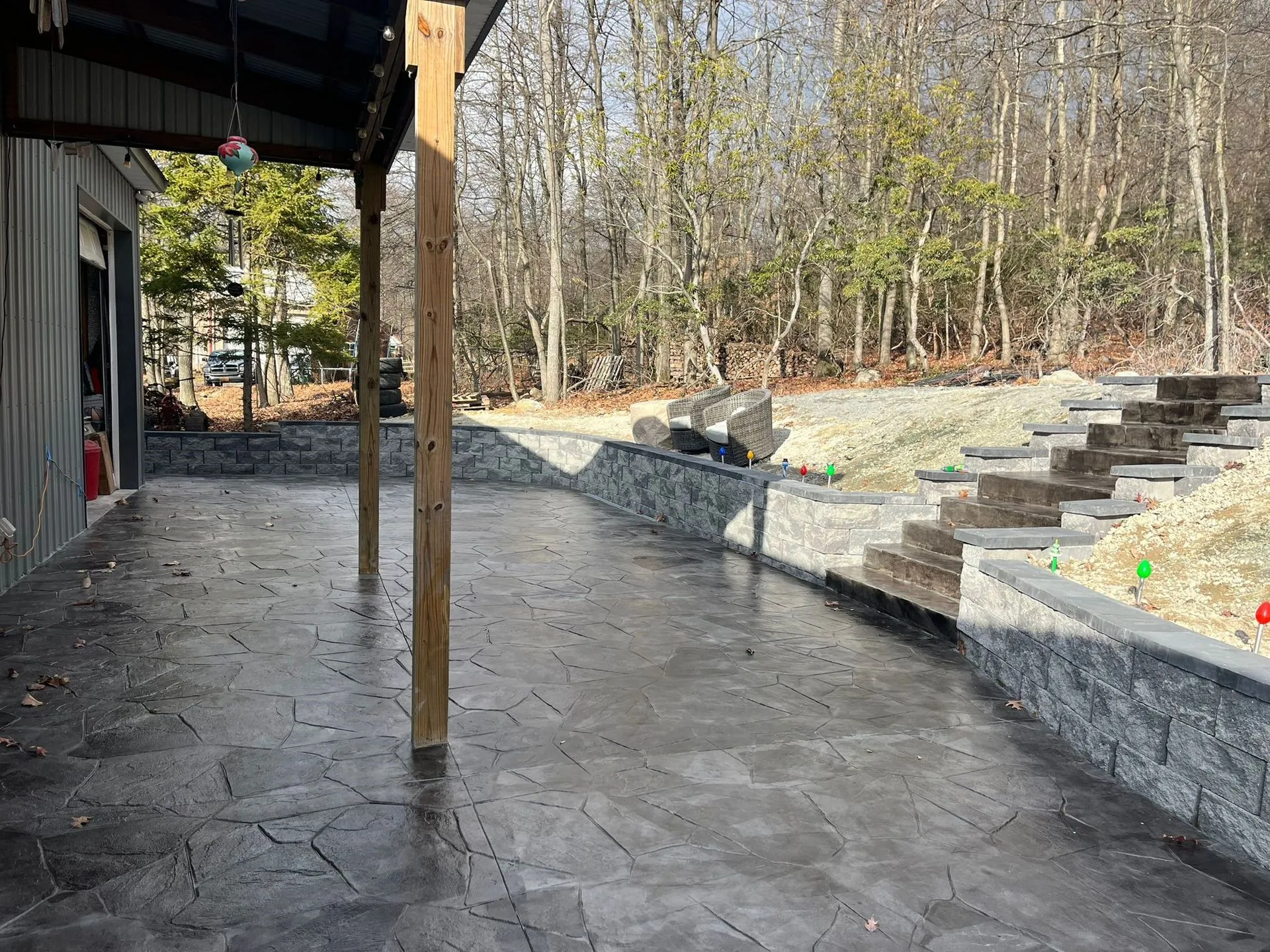
Stamped and colored finishes work outdoors too, as long as the pattern is textured rather than slick and the sealer is chosen for a walking surface. That's the route to take when the steps need to match an existing patio or pool deck — see our stamped and decorative concrete work for the pattern and color range, or the guide to walkway and entryway ideas if the steps are part of a larger front approach.
"Redid our entire walkway and it looks beautiful! They are professional, quick, and do a wonderful job."
See our profile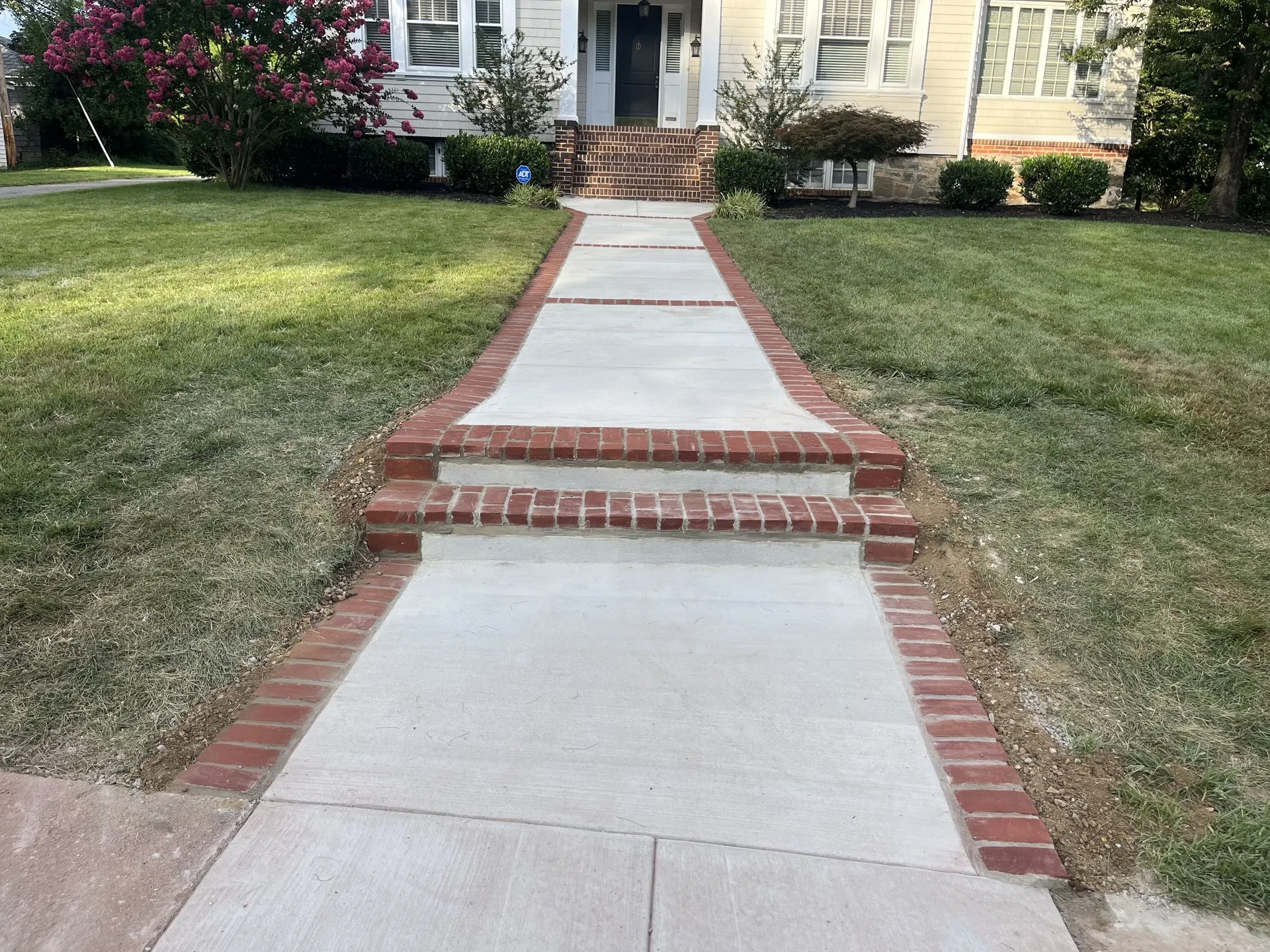
Steps and Landings Around Maryland
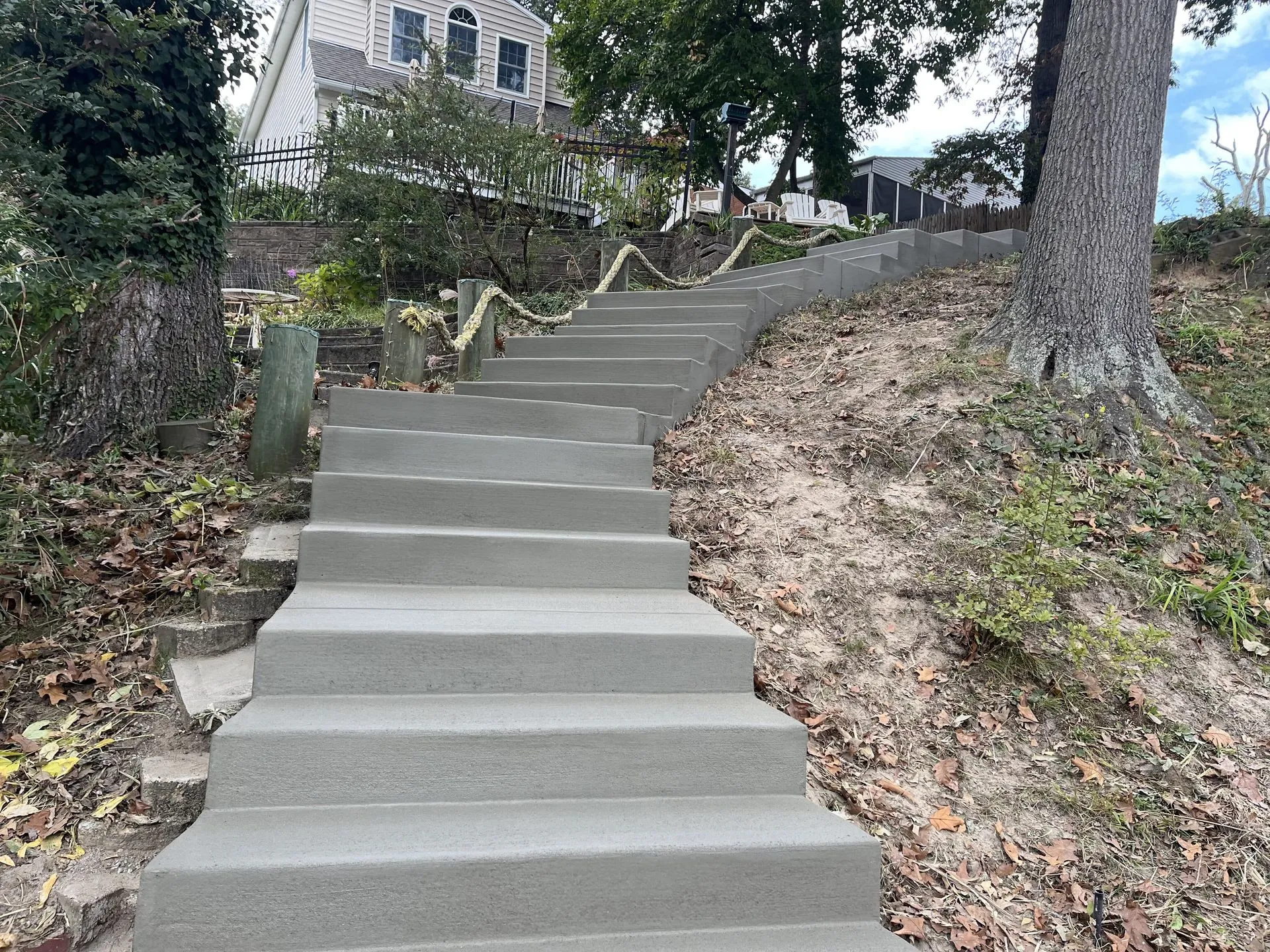
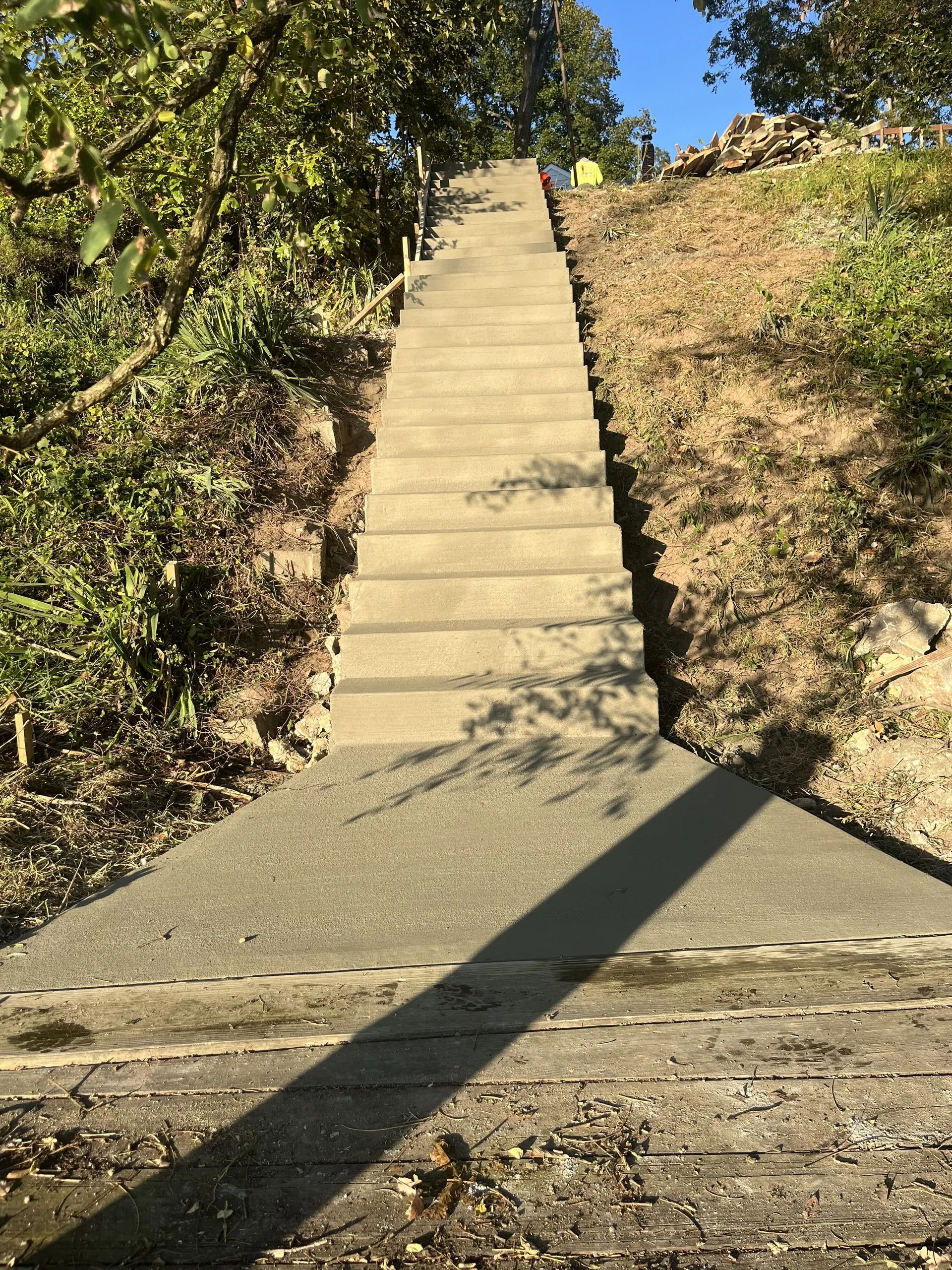
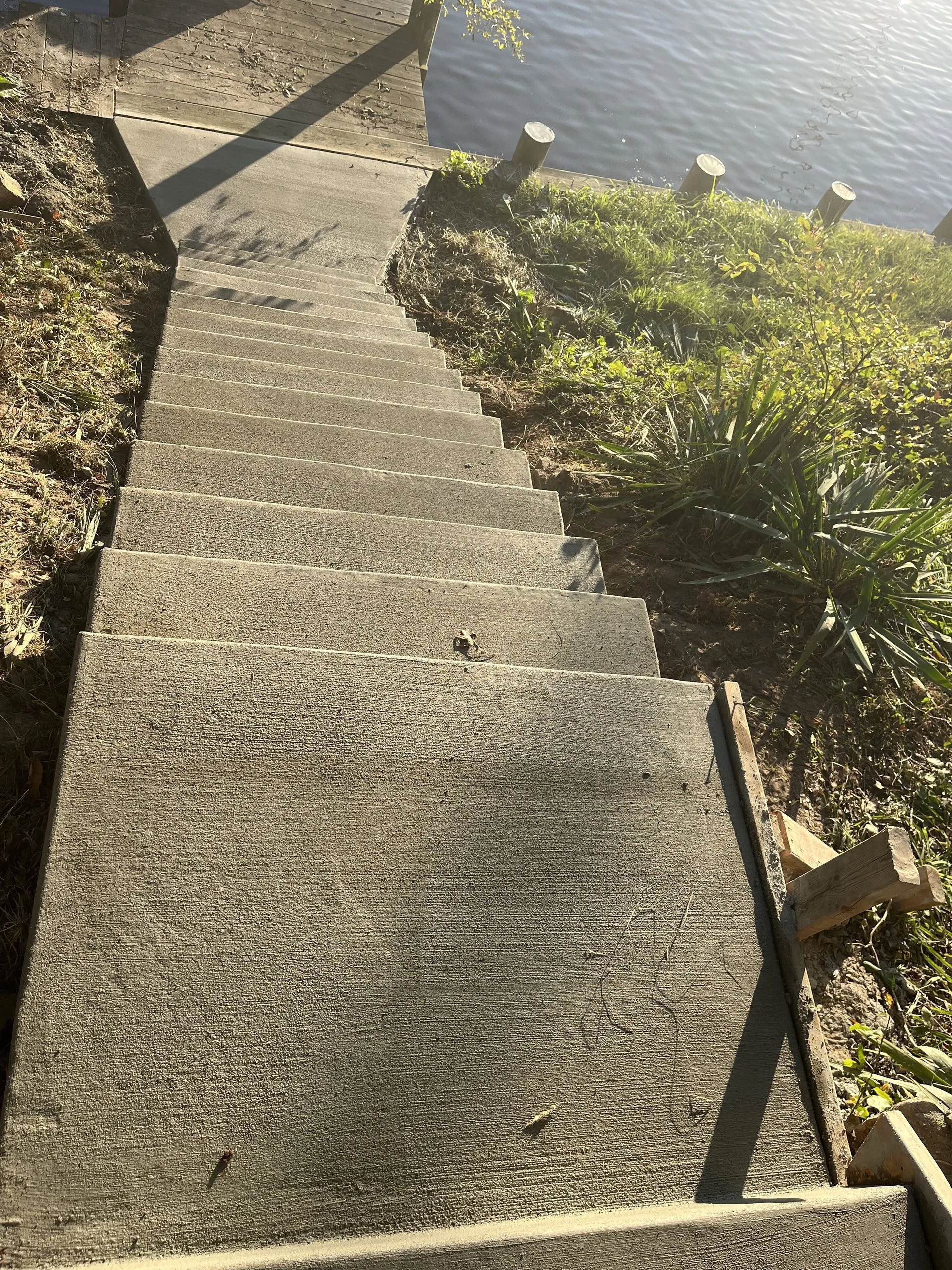
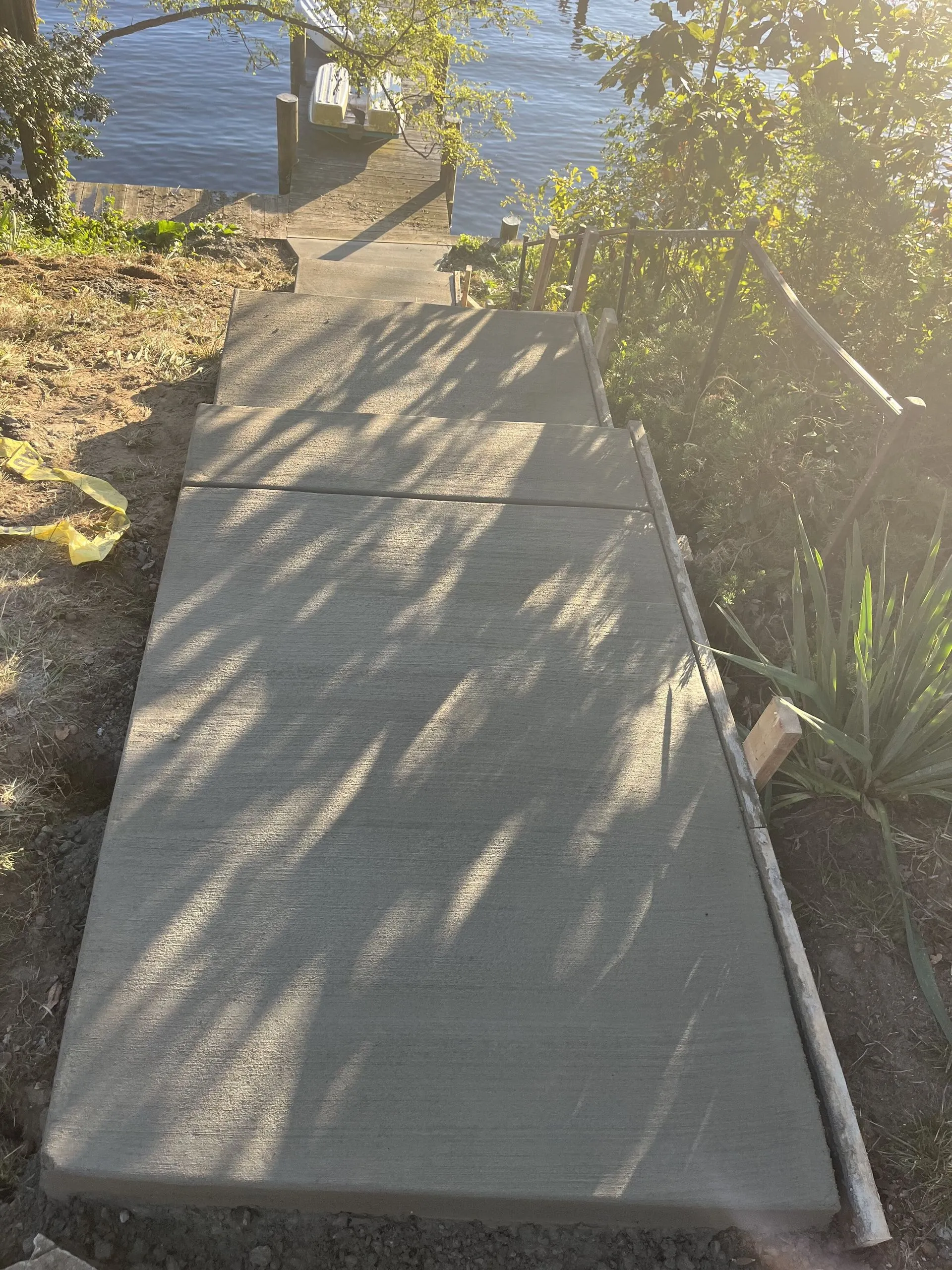
These are real projects, most of them on ground that gave the previous owner trouble for years. A long run climbing a wooded hillside to a front door. Broom-finished treads dropping down to a dock on the water. Front walks with brick borders and a landing at the stoop, poured for row houses and single-family homes alike. Click any photo to open it full size.
What they have in common isn't the style — it's that the grade, the drainage, and the base were sorted out before a single yard of concrete showed up.
"The job was completed in one day. We are very satisfied with his work. They also cleaned the yard and put grass seed where needed. I rate him a 10+"
See our profile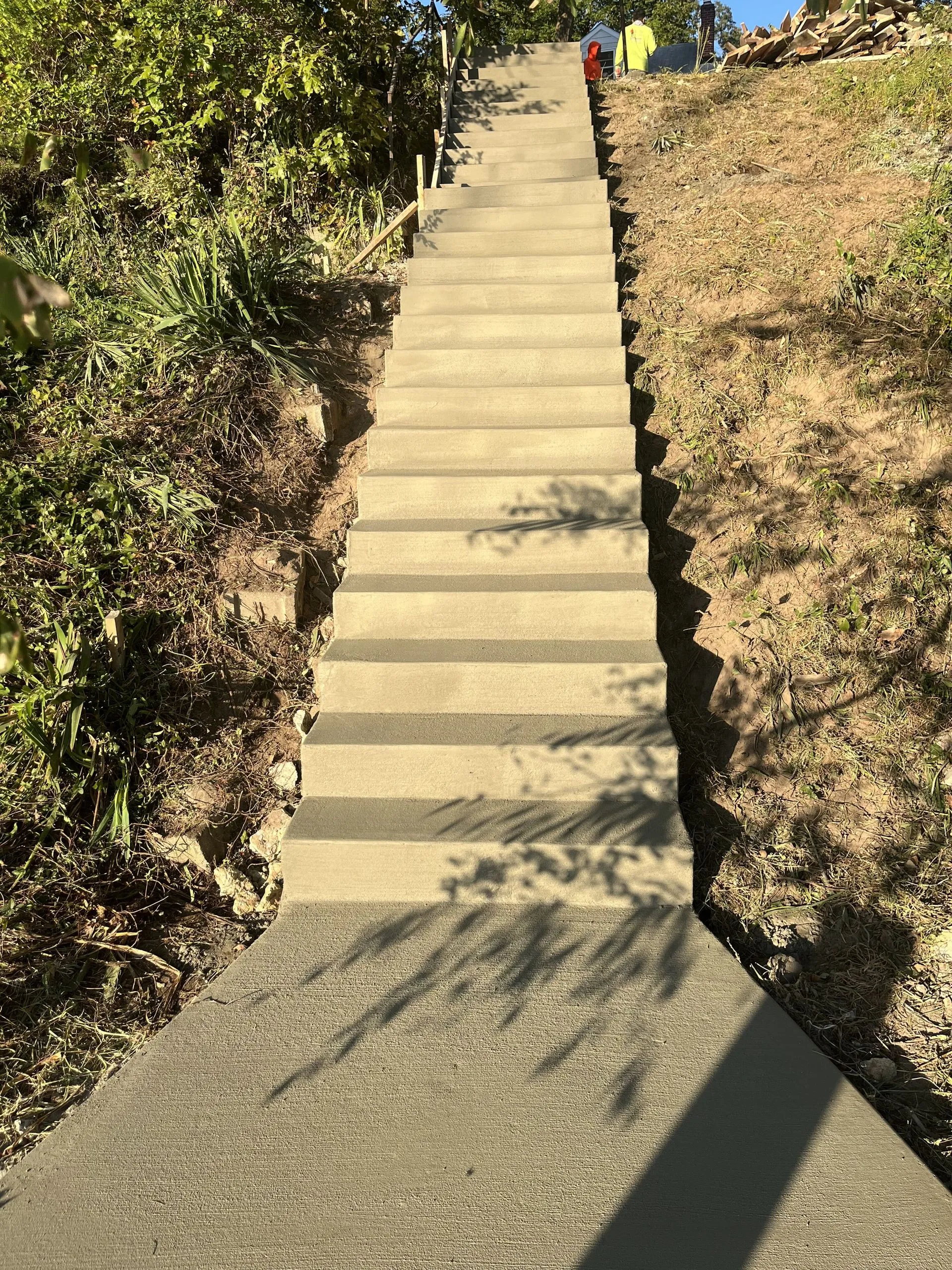
Maryland Slopes Have Their Own Rules
Ground behaves differently here than it does two states in any direction. Much of Anne Arundel and Baltimore County sits on clay-heavy soil that holds water instead of draining it, then swells and shrinks with the seasons. Waterfront lots along the Severn and the Magothy drop hard toward the shoreline and stay damp near the bottom. Older Baltimore neighborhoods hand you a different problem entirely — a short, steep run from sidewalk to stoop with no room to work and a neighbor's wall three feet away.
All of it is normal to us. We've poured steps, walks, and landings across Glen Burnie, Annapolis, Severna Park, Pasadena, Frederick, and everywhere in between; the full list is on our service areas page. If your slope needs holding as well as climbing, the companion piece on retaining walls for sloped yards is the one to read next.
"Brijo concrete solutions installed our front of house side walk and did a great job. Easy to work with and scheduled quickly. Reasonably priced compared to other companies in the area."
See our profileFrom First Walk-Through to Final Sweep
Most sloped-yard step projects follow the same six stages. Here's what to expect from the day you call to the day the crew loads up.
Walk the Slope
Jose comes out, walks the grade with you, and looks at where water runs today. No charge, no pressure.
Layout & Rise Calculation
We measure total fall and divide it into even risers, then set tread depth and landing spots around it.
Excavation & Base
Dig to solid ground, cut the bearing below frost depth, then place and compact crushed stone across the run.
Forms & Reinforcement
Braced forms set the shape; steel ties the treads, risers, and landing into a single structure.
Pour, Finish & Cure
Concrete goes in, gets floated and broomed for grip, then stays roped off while it gains strength.
Cleanup & Walkthrough
Forms pulled, edges backfilled, grass seed where we disturbed the lawn, and a final look together.
Concrete Steps: What Homeowners Ask
Built on a proper base with drainage handled, exterior concrete steps are a multi-decade investment — they typically outlast the deck, the fence, and the driveway they connect to. What shortens that lifespan is almost never the concrete itself. It's steps poured on unstable fill, or water with nowhere to go behind the risers.
The bottom of the run has to bear on stable ground below the frost line, so it can't be lifted when the soil freezes and expands. How that's achieved depends on the site and the height of the run — some projects need a poured footing, others are handled with deeper excavation and a thicker compacted base. We work it out on the walk-through, and it's part of the written estimate.
Normal foot traffic is usually fine within a day or two, depending on weather. Full design strength takes considerably longer, which is why we rope the run off and ask you to keep vehicles, heavy loads, and pets away for the first stretch. The crew will tell you the specific timeline for your pour before they leave.
Usually, yes. Stamped patterns and integral colors can be matched closely to an existing surface, and a brick or paver border is an easy way to tie old and new together when an exact match isn't realistic. Bear in mind that concrete poured years apart will never be an identical shade — sun and weather change the older surface. Matching the texture and border detail is what makes it read as one project.
Longer or steeper runs generally need one, and it's much easier to plan the mounting before the pour than to drill for it afterward. Tell us at the walk-through if you want a metal railing, a rope-and-post rail like the ones in our hillside projects, or nothing at all, and we'll form the steps accordingly.
There's no honest flat rate, because the number of risers, the total drop, how much excavation the slope needs, machine access to the work area, and any drainage or wall work all move the figure. What we can promise is a free on-site visit and a written estimate with the scope spelled out, so you're comparing like for like against any other bid.
Jose and the team at Brijo Concrete Solutions did an amazing job on our patio. From the first day through the project's completion, they were professional, hardworking, and easy to work with. The stamped concrete, retaining wall, and overall attention to detail turned out even better than we expected. It's refreshing to find a contractor who takes pride in their work and stands behind it.
Related Work on Sloped Lots
Poured Concrete
Steps, walks, slabs, driveways, and foundations poured and finished by our own crew.
Learn MoreHardscaping
Retaining walls, seating walls, and grade work that make a difficult slope usable again.
Learn MoreStamped Concrete
Decorative patterns and colors for steps, patios, and pool decks that need to match.
Learn MoreWhat You Get With Brijo
5.0 Google Rating
Every review on our profile is five stars, and most of them mention the same three things: speed, price, and cleanup.
The Owner Is On Site
Jose runs the crew himself. The person who quotes your steps is the person standing there when they're poured.
Our Own Crew
Concrete work isn't handed off to a subcontractor you've never met, so quality doesn't change between visits.
Scheduled Fast, Finished Fast
Customers routinely note that we started within days of the estimate and wrapped up in one to three days on site.
Clean Jobsites
Debris hauled out, the work area swept, and grass seed put down where the lawn took a beating.
One Crew, Whole Project
Steps, retaining wall, walkway, and patio can be done together instead of coordinating three contractors.
Areas We Serve
Let's Walk the Hill Together
Send us a few details or call and we'll come look at the grade in person. You'll get a written estimate with the scope spelled out — base, drainage, finish, and cleanup — not a number scribbled on a business card.
Tell Us About It
Describe the slope and where you want the steps to land. Photos help, but they're not required.
Get a Written Estimate
We walk the site, take measurements, and put the full scope in writing before anything is committed.
We Build and Clean Up
Most step runs are done in a few days on site, and the yard is left tidy when we go.