
The Best Time of Year to Pour Concrete in Maryland
Weather Decides More Than You Think
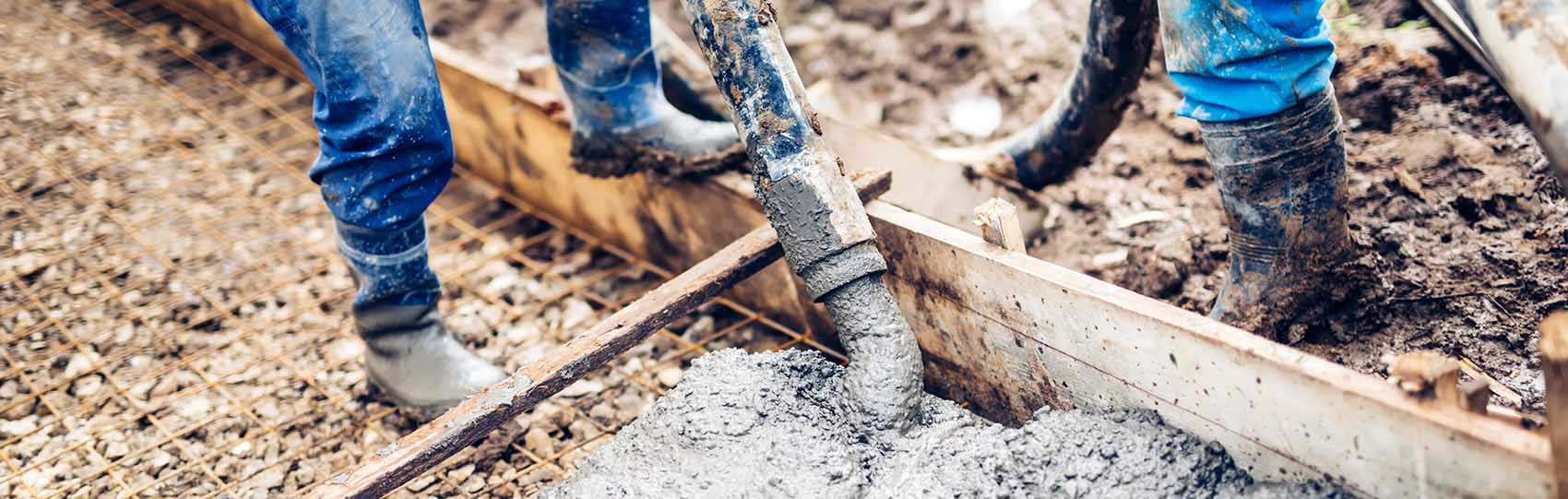
Concrete doesn't dry — it cures. The moment water meets cement, a chemical reaction kicks off that keeps building strength for weeks, and the temperature, humidity, and ground conditions on pour day steer how cleanly that reaction runs. A slab placed on a mild 65-degree October morning and the same slab placed on a 94-degree July afternoon are not the same slab five years later.
So we get the same question every year, usually from someone who has been staring at a cracked patio all winter: when should we actually do this? Here's how each Maryland season behaves on a real job site — from Glen Burnie out to Frederick — and where the honest sweet spot sits.
Get a Free Estimate!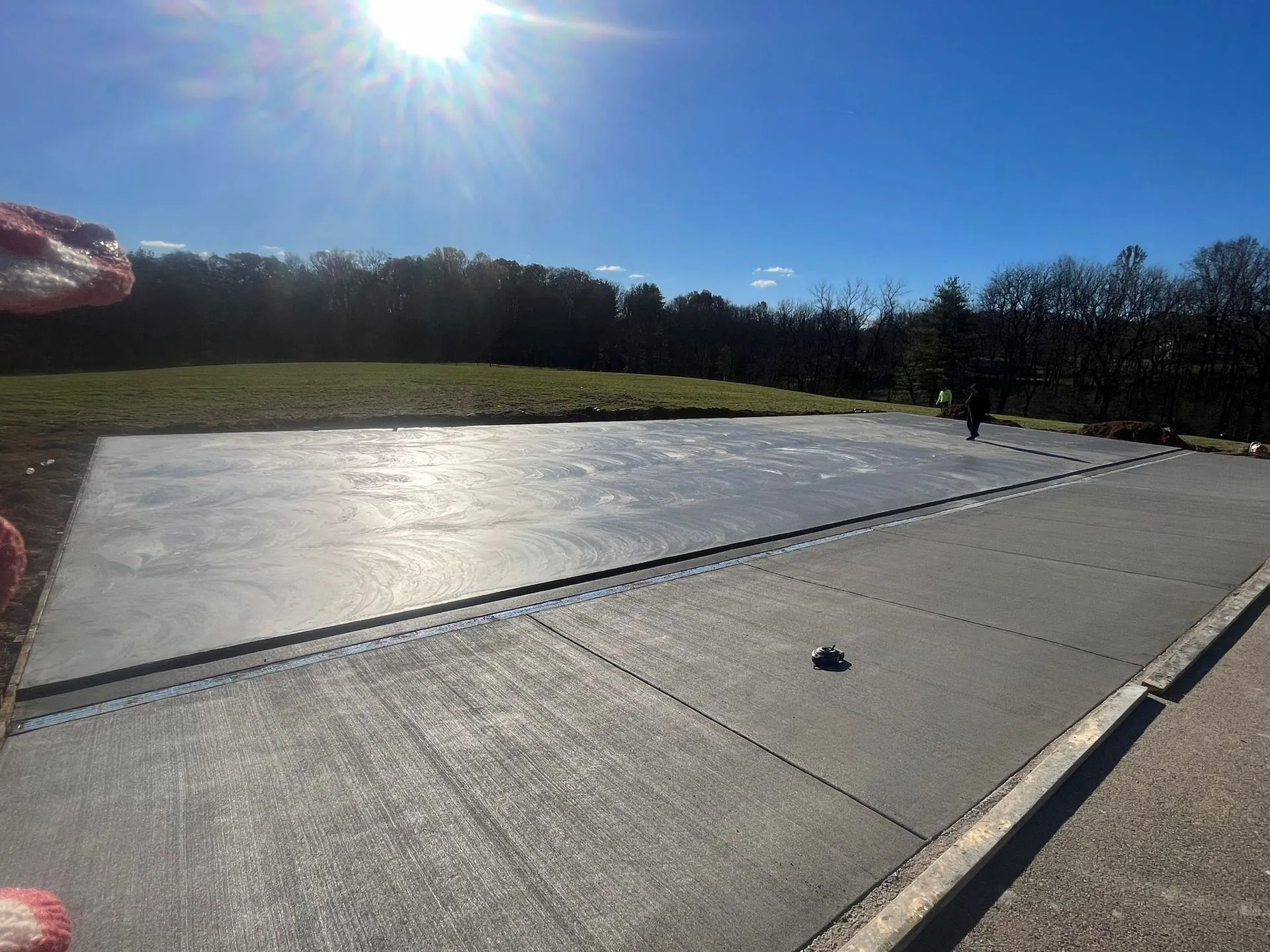
How Each Maryland Season Treats a Fresh Pour
Every season here has a trade-off — one gives you good air temperature but bad ground, another gives you dry ground but brutal heat. Below is what each one actually does to a slab, and what our crews do to work around it.
Spring: Good Air, Difficult Ground
Spring gets requested more than any other season, and the air temperature genuinely is excellent by late April. The problem is below your feet. Frost coming out of the ground leaves the subgrade soft and uneven, and Maryland clay holds that water long after the surface looks dry. Pour on a subgrade that hasn't fully drained and settled, and you've built a slab on a base that's still moving.
Early spring also means rain delays — not a scheduling annoyance, but a real risk, since rain landing on fresh concrete before it sets can weaken the surface and leave you with a dusty, pitted finish. We'd rather push a March date two weeks than hand you a compromised slab, which is why our poured concrete crews plan spring work around drainage first and the calendar second.
"Jose and his crew were very professional and incredibly efficient in completing the concrete job that they did for me. I'm very happy with my new driveway, sidewalk and porch."
See our profile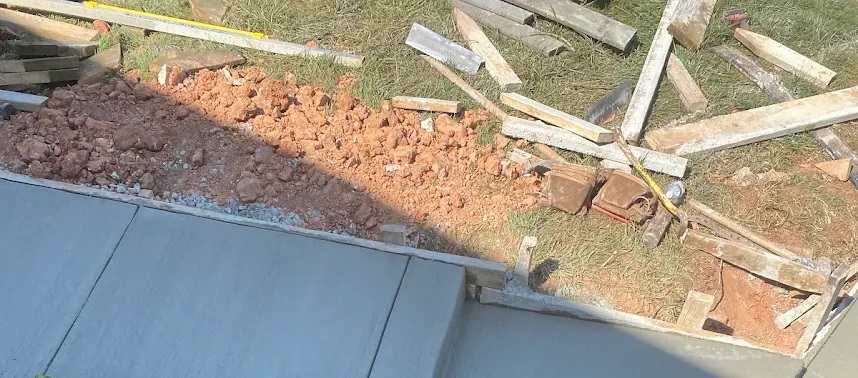
Summer: Beat the Heat or Pay for It
Summer has one enormous advantage — dry, stable ground — and one enormous problem. Once you're above about 90 degrees, water leaves the surface faster than it can rise from the slab below, and that's where plastic shrinkage cracking comes from: thin, random hairline cracks that show up while the concrete is still fresh. Heat also shortens the working window, so a mix that gives a crew an hour of finishing time in October might give them twenty minutes in August.
None of that means summer is off the table. It means the pour has to be run properly: early morning starts, the subgrade dampened before placement, enough hands on site to finish fast, and curing measures applied immediately rather than at the end of the day. A summer slab poured with discipline is every bit as good as an autumn one — it just takes more crew and more planning to get there.
"Communication and workmanship were top notch. Patio replacement completed in one day. Jose and his crew are very professional. Excellent job with clean up too."
See our profile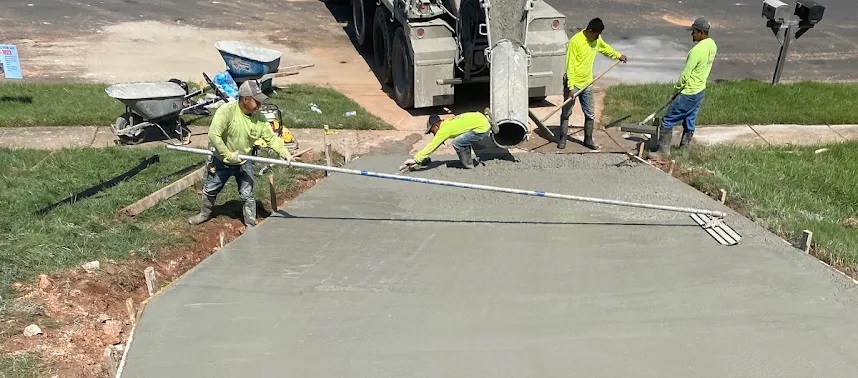
Fall: The Sweet Spot for Maryland Concrete
September and October are as close to ideal as this state gets. Daytime highs sit in the sixties and seventies, nights usually stay above fifty, and the humidity has dropped off the summer peak — which means the mix hydrates at a steady pace instead of racing or stalling. The ground has had all summer to drain, so the subgrade compacts properly and stays where you put it.
There's a second reason we push people toward fall, and it's the one most homeowners haven't considered: sealing. Decorative and stamped surfaces need a fully cured slab and dry, mild conditions before sealer goes down. Pour in early fall and there's room for the slab to reach strength and get sealed before the first hard freeze. Pour in late November and that window is gone until spring.
"I contacted Jose on a Monday and the work was started two days later and finished in two days. The price was excellent. I highly recommend BRIJO Concrete Solutions."
See our profile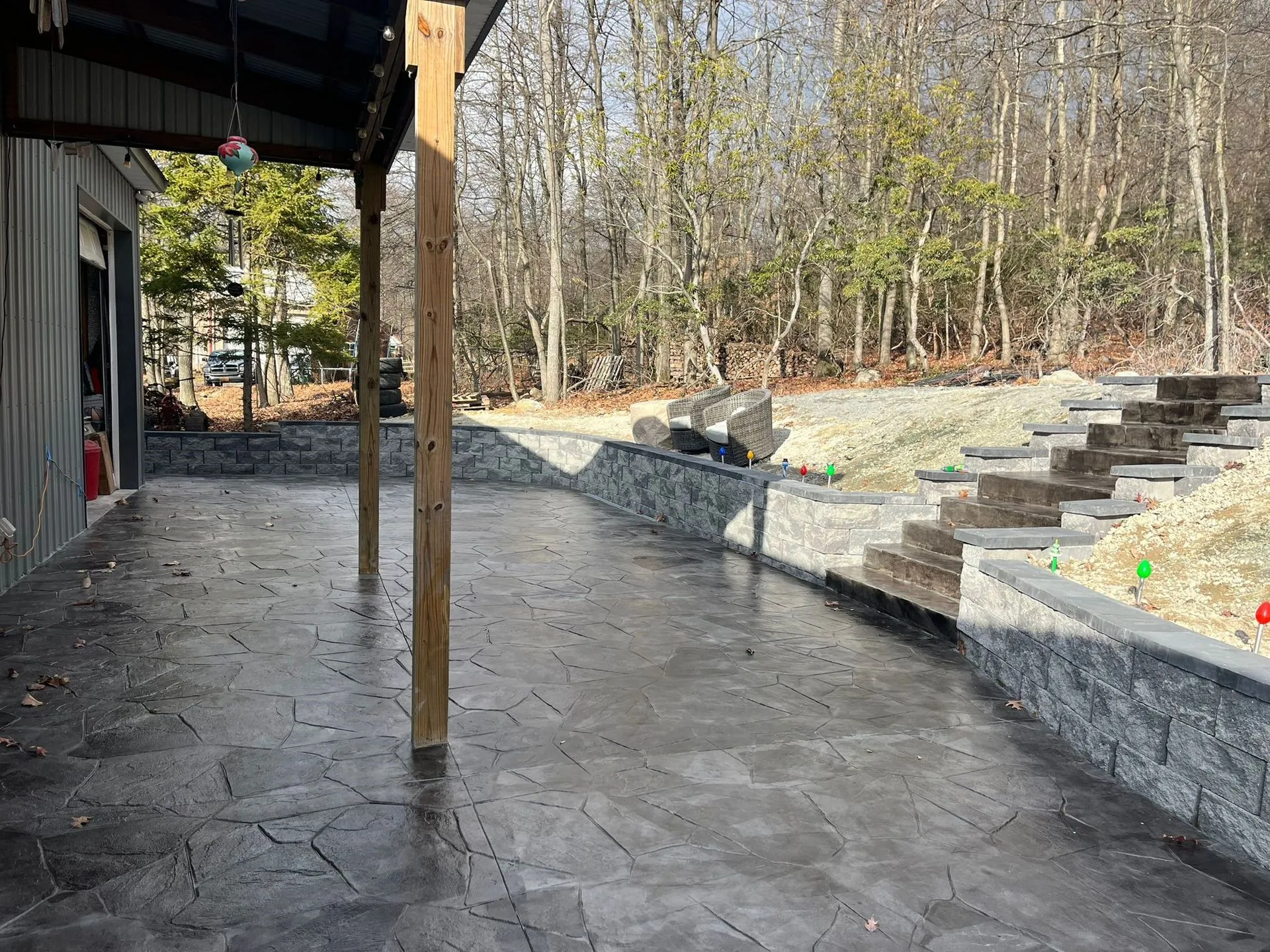

Winter: Possible, But It Costs More
Cold-weather concreting is a real discipline, not a myth — commercial crews do it all winter. But it changes the job. Below roughly 40 degrees, hydration slows dramatically and the slab takes far longer to reach strength. If the water in a fresh mix freezes before that early strength develops, the damage is permanent and no amount of warm weather afterward will undo it. Protecting against that means insulated blankets, heated enclosures, warmed mix water, or accelerating admixtures — all of which add cost and time to what would have been a straightforward pour.
There's a second winter issue that outlasts the pour itself: deicing salt. Concrete placed late in the year goes into its first freeze-thaw season young, and salt on a young slab is the fastest way to cause surface scaling. If a winter pour is genuinely unavoidable — a garage floor, an emergency slab, a foundation on a build schedule — we'll do it right and tell you exactly how to treat it through the first winter. If it can wait, we'll be honest and tell you that instead.
"A simple job by their standards, but a big help to us in getting our backyard squared away. Look no further if you want quality concrete work done in a timely manner by a very professional and well-qualified company."
See our profileWhy Maryland Isn't a Generic Climate
National advice about concrete gets written for an average that doesn't exist here. Maryland hands you humid Chesapeake summers, clay-heavy soil that swells and shrinks with moisture, and a winter that doesn't stay cold — it cycles above and below freezing over and over. That freeze-thaw cycling is the single biggest long-term threat to exterior flatwork in this region, and it's why properly air-entrained mixes, real control joints, and honest drainage planning matter more here than they would in a dry, stable climate.
It also means the right answer changes by a few weeks depending on where you are. A job in Frederick sits in a different microclimate than one two blocks from the water in Pasadena, and a shaded north-facing driveway holds ground frost longer than the open backyard next door. We plan around what's actually on your lot — whether that's stamped and decorative concrete or a straightforward patio and paver installation.
"Jose Valle and his crew did a excellent job on our patio. The job was completed in one day. They also cleaned the yard and put grass seed where needed. I rate him a 10+"
See our profileBooking a Pour, Start to Finish
Weather planning isn't something we do on pour day — it starts the moment you call. Here's how a project moves from first conversation to a finished, cured slab.
Tell Us Your Window
Call or send the form with what you want built and when you'd like it done. We'll tell you straight away whether that timing makes sense.
Site Walk & Measure
We look at drainage, grade, sun exposure and access — the things that decide how your lot behaves in each season.
We Slot the Weather
You get a firm date chosen around the forecast, not just the next open square on a calendar.
Excavation & Forms
Base material goes in, gets compacted, and forms are set square before a single truck is called.
Pour & Finish
Enough crew on site to place, screed, float and finish inside the working window the temperature gives us.
Cure, Clean & Check Back
Curing is protected, the site is left clean, and you get clear instructions for the first month and the first winter.
Best Timing by Project Type
Driveways: Late Spring Through Mid-Fall
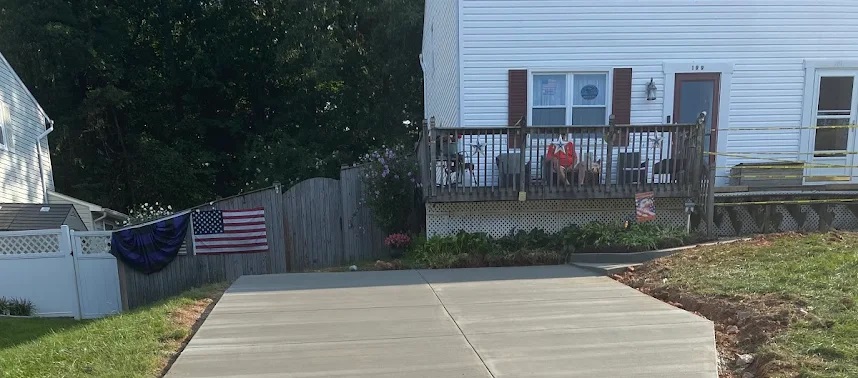
A driveway is the hardest-working slab on your property, and it's also the one most likely to meet a salt truck. Pouring it with enough runway before winter matters more than almost any other project — you want the slab well past its early strength gain and ideally sealed before the first freeze-thaw cycle arrives.
You'll also need to stay off it longer than you think: foot traffic after a few days, vehicles considerably later. Plan for that in the timing, and consider whether you have a place to park during the wait.
Patios & Stamped Concrete: Early Fall Wins
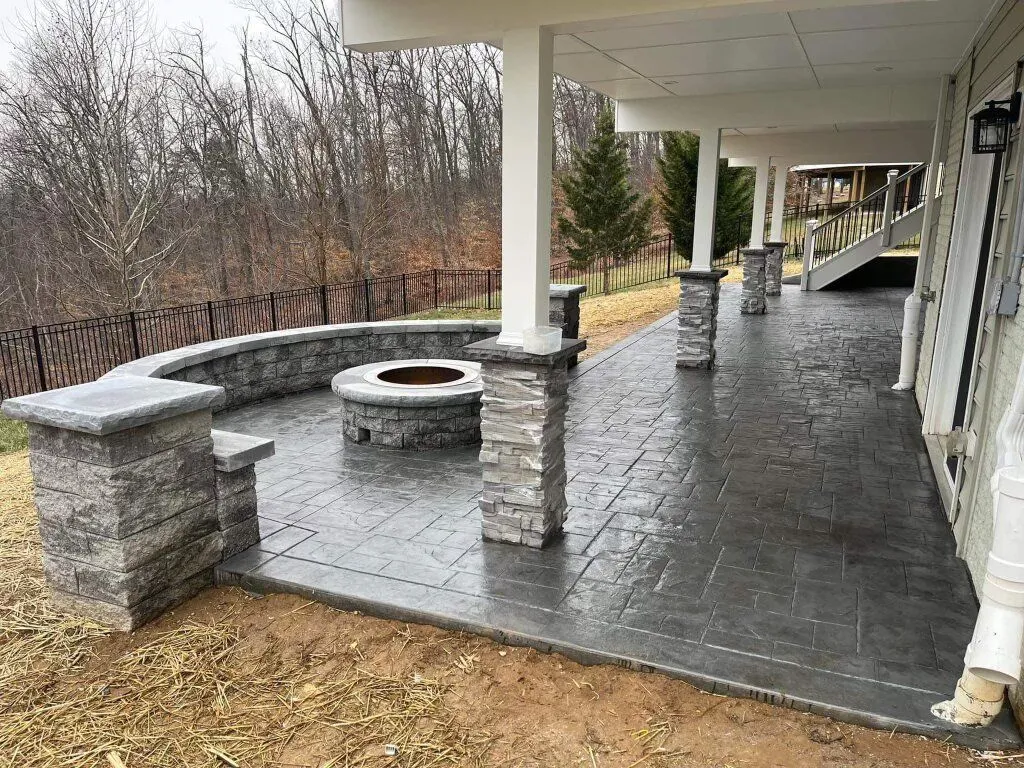
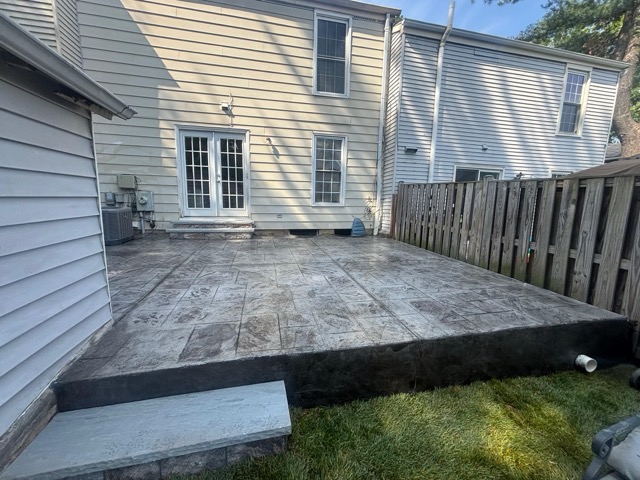
Stamped work is the most weather-sensitive thing we do. The stamping has to happen inside a narrow window while the surface is at exactly the right stiffness — too hot and it sets before the pattern is finished, too cold and it won't take a crisp impression. Mild, still autumn days give a crew the room to get the detail right.
Add the sealing schedule and fall becomes the obvious answer. See what the finished work looks like on our stamped and decorative concrete page.
Slabs & Foundations: More Flexible
Shed pads, garage floors, footings and foundations are the most forgiving category, partly because many of them end up protected or enclosed. Interior and covered pours can run later into the year than exterior flatwork, since the surrounding structure buffers the temperature swings.
That said, the excavation still has to happen in workable ground, which is what usually decides the date. Details on our poured concrete services page.
Steps & Walkways: Watch the Frost Line
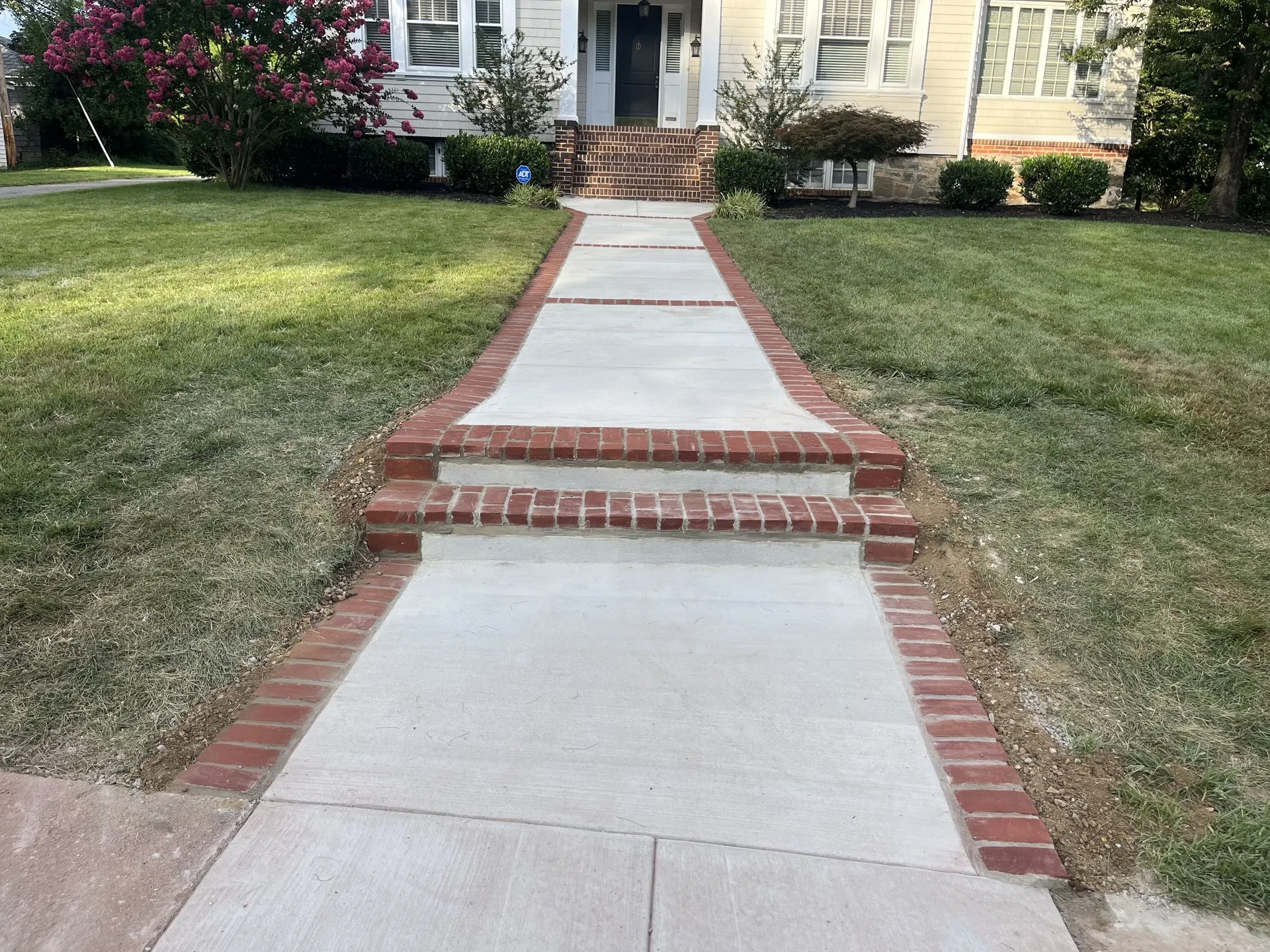
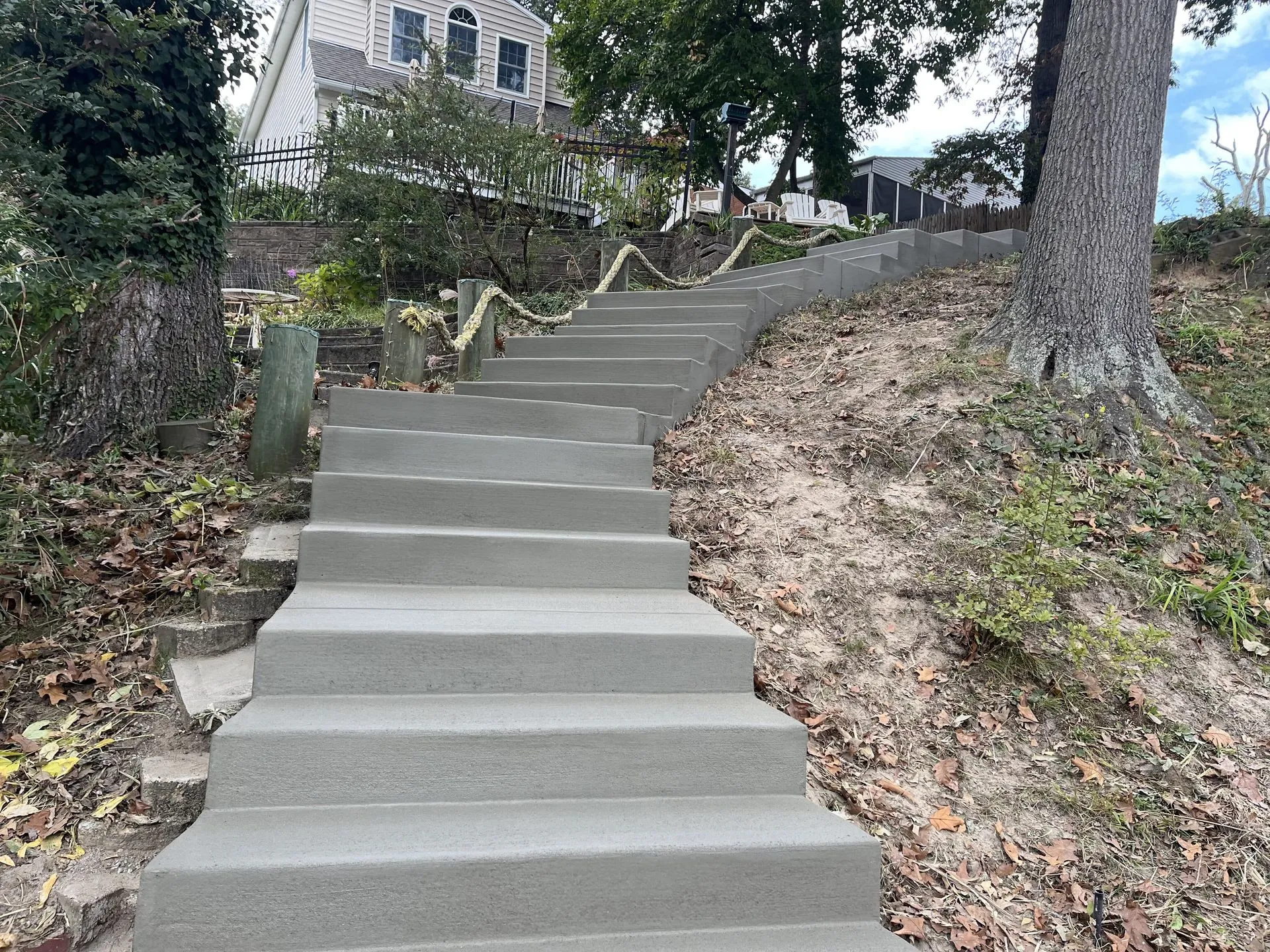
Steps and entry landings carry more risk from ground movement than a flat patio does, because anything that heaves shows up immediately as an uneven riser — and uneven risers are a trip hazard right at your front door. Footings need to be below the frost line and the base needs to be genuinely stable.
That makes late spring through fall the safer range. Walkways, steps and retaining elements often get combined into a single hardscaping project so the whole approach is built and cured together.
Concrete Timing, Answered
As a working rule, sustained temperatures below about 40°F mean the pour needs cold-weather protection — blankets, enclosures, warmed water, or admixtures. The bigger danger is freezing: if fresh concrete freezes before it develops early strength, the damage is permanent. Below roughly 50°F, curing simply slows down, which isn't harmful on its own but does stretch out your timeline.
Yes, and we do it all season. Above 90°F the mix loses water fast and the finishing window shrinks, so the job needs an early start, a dampened subgrade, more hands on site, and curing protection applied right away. Done properly, a summer slab performs just as well as one poured in October.
Light foot traffic is usually fine after a couple of days, while vehicles need considerably longer — and both stretch out in cooler weather, since curing is temperature-driven. We give every customer specific timing for their pour rather than a generic number. There's a fuller explanation in our guide to how long concrete takes to cure.
It can, if it hits before the surface has set — rainwater works into the top layer and can leave you with a weak, dusty finish. Once the slab has set and curing is underway, moisture is far less of a concern. This is exactly why we watch the forecast and would rather move a date than gamble on it.
Not during its first winter. Young concrete is much more vulnerable to surface scaling from deicing chemicals, and once scaling starts it doesn't reverse. Sand gives you traction without the chemical attack. After the first season, and especially with a sealed surface, you have more latitude — but we'd still go easy on it.
For September and October dates, reach out in mid to late summer. Those weeks are the ones every homeowner and every contractor in the area wants, and they're committed well before the weather actually turns. We move quickly once a project is scheduled, but we can't create calendar space that's already spoken for.
I couldn't be happier with the work Brijo Concrete Solutions did on my home. I had a large stamped concrete patio and sidewalk installed, and the entire experience was top-notch from start to finish. Their pricing was the best I found by far, and they were able to get the job scheduled and completed faster than anyone else I spoke with—which made a huge difference. The crew showed up on time, worked efficiently, and kept the area clean throughout the process.
What We Can Build This Season
Poured Concrete
Driveways, slabs, footings and foundations placed and finished by a crew that plans the pour around the forecast.
Learn MoreStamped & Decorative
Pattern and color work that needs the right weather window — the reason we push these projects toward early fall.
Learn MorePatios & Pavers
Outdoor living space built on a properly compacted base, finished clean and ready before the season turns.
Learn MoreWhat You Get With Brijo
5.0-Star Google Rating
Every review on our profile is a five. Read them yourself — we'd rather you check than take our word for it.
Fast, Committed Turnaround
Patios finished in a day, driveways in a matter of days. When we give you a date, the crew shows up on it.
Genuinely Clean Job Sites
Debris hauled, yards raked, grass seed put down where the work disturbed it. Customers mention it constantly.
Weather-Aware Scheduling
We move dates when the forecast says to. A pour rushed into bad conditions costs you far more than a week's wait.
The Contractor Others Call
Other trades in the area bring us in on their own projects. That's the reference we're proudest of.
Local to Anne Arundel County
Based in Glen Burnie, working from Baltimore to Frederick. We know how this ground behaves because we work in it.
Areas We Serve
Let's Get You on the Calendar
Tell us what you want built and roughly when you'd like it done. We'll tell you honestly whether that timing works, what it would cost, and when we could start. No pressure, no obligation.
Reach Out
Send the form or call the office. Tell us the project and your ideal timeframe.
Free On-Site Estimate
We measure, check the grade and drainage, and give you a clear written number.
Pick Your Date
You get a firm start date chosen around the weather — and a crew that keeps it.