
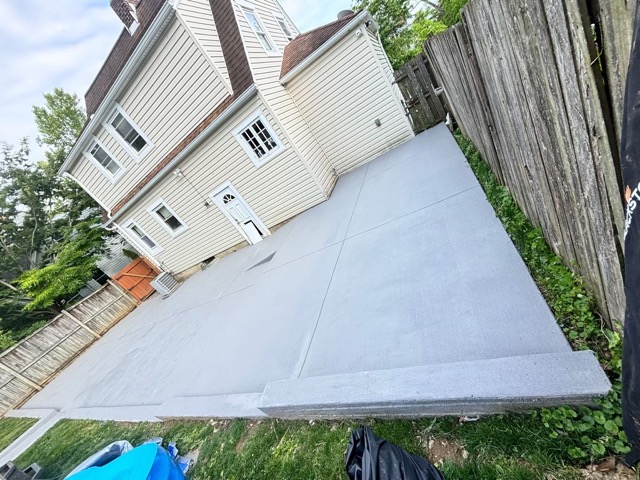
Combining Patios and Decks: The Ultimate Maryland Outdoor Living Space
Why Maryland's Best Outdoor Spaces Use Both a Patio and a Deck
Most homeowners think of patios and decks as an either-or decision. But the most functional — and most impressive — outdoor living spaces in Maryland combine both. A raised deck off the back door gives you a dry, elevated platform perfect for dining and entertaining, while a ground-level patio extends the living area into the yard for fire pits, grilling stations, and open lounging. Together, they create distinct zones that serve different purposes without competing for the same footprint.
The combination also solves practical problems. Decks handle grade changes naturally — if your back door is three or four feet above yard level, a deck bridges that gap without the cost of filling and compacting. A patio at ground level then picks up where the deck ends, providing a durable, low-maintenance surface that handles furniture, foot traffic, and weather without the upkeep pressure-treated wood demands. The key is designing the transition between the two so it feels seamless rather than like an afterthought. Our guide to seamless patio transitions covers this in detail.
"It was a pleasure to work with Jose and the crew with Brijo. Very professional and he explained everything from beginning to end. The company tore up the previous and put down a new driveway and front steps in as well as an additional patio in the back of our house."
See our profileConcrete, Pavers, and Stone: Picking the Right Patio Surface
The patio is your ground-level workhorse — it needs to handle furniture, grills, fire pits, and constant foot traffic while looking good for years. Stamped concrete gives you the widest range of design options at a moderate price point, with patterns that mimic flagstone, brick, or tile. Pavers offer a modular, high-end look and allow for easy repairs since individual units can be replaced without affecting the surrounding surface. Natural stone is the premium option — every piece is unique, and the result is a one-of-a-kind surface that ages beautifully.
Design is where patios get interesting. Shape the patio to follow the natural contours of your yard rather than forcing a rectangle. Curved edges, built-in seating walls, and integrated planter borders turn a flat slab into an outdoor room with definition. If you're planning a fire pit, pour a dedicated pad with a non-combustible border. If an outdoor kitchen is on the list, run conduit and plumbing during the pour — retrofitting later is expensive and disruptive. Brijo designs patios as part of the bigger outdoor living picture, not as standalone slabs. See our guide to designing the perfect patio for more ideas.
"The best. Very professional and they did a great job with our patio. They didn't leave any mess, the job was done quickly and perfectly!"
See our profileHundred percent quality! Loved how the project turned out. Can't wait to enjoy my 540 square-foot patio this summer. Thanks Jose and Crew. I will definitely be recommending this company and looking forward to future projects.
Deck Materials and Creating a Seamless Transition
The deck portion of a combined outdoor space typically sits adjacent to the house at door level, creating a natural extension of your indoor living area. Pressure-treated wood is the most affordable framing option and works well with composite or PVC decking boards on top. Composite decking requires virtually no maintenance — no staining, no sealing, no sanding — and comes in a range of colors and grain patterns that mimic real wood. For homeowners who prefer the look and feel of natural wood, tropical hardwoods like ipe offer exceptional durability but come at a premium price.
The transition between deck and patio is where design skill matters most. A well-planned step-down with lighting creates a natural flow between levels. Matching the deck railing color to the patio's border or seating wall ties the two spaces together visually. Landing pads at the base of deck stairs should be poured from the same concrete as the patio so there's no visual break. Brijo handles both the concrete work and the custom deck construction, which means one crew coordinates the entire project from footing to finish.
"I cannot say enough good things about the team at Brijo. Jose and his crew did a phenomenal job on my driveway and porch. They were easy to work with and very professional. I would recommend them to anyone."
See our profileFrequently Asked Questions
Concrete patios are generally less expensive per square foot than composite or wood decks, especially when you factor in long-term maintenance. However, the total cost depends on site conditions — a patio on a flat yard is straightforward, but if you need significant grading or a retaining wall to create a level surface, a deck might be more cost-effective for that portion. Brijo quotes both and helps you find the best split for your property and budget.
Decks almost always require a building permit in Maryland because they involve structural framing attached to the house. Ground-level patios typically do not require a permit unless they exceed a certain size or are within a setback zone. Requirements vary by county, so Brijo checks local codes for your specific property and handles permitting when needed.
The key is planning the transition from the start rather than treating each surface as a separate project. Wide steps with integrated lighting, matching color tones between the deck boards and the patio surface, and consistent railing or border elements tie the two levels together. A concrete landing pad at the base of the deck stairs, poured in the same finish as the patio, eliminates the visual break between surfaces.
Concrete patios are the lowest-maintenance option — reseal every two to three years and clean as needed. Composite decks are close behind, requiring only occasional washing. Pressure-treated wood decks need staining or sealing every one to two years to prevent rot and warping. Combining a low-maintenance patio with a composite deck gives you the best of both worlds.
Yes — Brijo handles both concrete work and custom deck construction. Having one contractor manage the entire project means the patio footings, deck footings, grading, drainage, and transitions are all coordinated from day one. That's how you get a seamless result instead of two separate projects that don't quite connect.
A typical combined project runs five to ten days depending on size and complexity. The concrete patio is usually poured first and needs a few days to cure before the deck stairs and landing tie in. Brijo sequences the work so there's minimal downtime between phases and your yard is usable as soon as possible.
Related Services
Custom Decks
Composite, PVC, or natural wood — Brijo designs and builds custom decks engineered for Maryland weather and your lifestyle.
Learn MorePatios & Pavers
Stamped concrete, pavers, or natural stone — we build patios that anchor your outdoor living space for decades.
Learn MoreLandscaping
Finish the look with professional landscaping that ties your new patio and deck into the rest of your yard.
Learn MoreGet a Free Patio & Deck Estimate
Whether you want a patio, a deck, or both — Brijo Concrete Solutions designs and builds the complete outdoor living space. One contractor, one vision, one seamless result. Free on-site estimates with no pressure and no hidden fees.
Call or Request a Quote
Reach us at 240-302-1823 or submit our online form. Use promo code 123-POUR for fast scheduling.
Design Consultation
Jose visits your property, discusses layout and materials, and provides a detailed quote for the full project scope.
We Build, You Relax
Our crew handles every phase — concrete, framing, decking, and cleanup — and delivers a space you'll use for years.
Explore concrete and hardscaping ideas that transform the space around your pool into a complete outdoor living area.
Learn what Maryland homeowners need to know about concrete foundations, garage slabs, and the details that prevent costly problems.