
Retaining Walls 101
A Guide to Retaining Wall Materials, Warning Signs, and Installation
Signs Your Property Needs a Retaining Wall
Most homeowners don't give retaining walls a second thought — until a slope starts creeping toward the house or a section of yard becomes unusable after every rainstorm. By the time the signs show up, the underlying problem has usually been building for a while. The good news is that a well-built retaining wall can solve the issue and add real value to your property in the process. This guide breaks down how to tell when you need one, what your material options look like, and what the installation process actually involves from start to finish.

Some warning signs are obvious. Others are easy to overlook until they've already caused damage. Here's what to watch for.
Soil erosion on slopes or hills. If you're losing ground — literally — after heavy rain, the soil on your property is moving in a direction it shouldn't be. Unchecked erosion can undermine foundations, damage landscaping, and eat away at usable yard space over time.
Water pooling near your foundation. Standing water after a storm isn't just a nuisance. It's a sign that your grading isn't directing water away from the house the way it should. A retaining wall combined with proper drainage can redirect water flow and protect your foundation from long-term moisture damage.
Leaning or bowing in an existing wall. If you already have a retaining wall and it's starting to lean, crack, or bow outward, it's under more pressure than it can handle. This doesn't fix itself — it gets worse, and eventually it fails.
Cracking in nearby hardscape or your foundation. Cracks in a patio, walkway, or foundation wall can indicate soil movement beneath the surface. That lateral pressure has to go somewhere, and it often shows up as structural cracking before anything else.
A yard you can't really use. If a steep slope is turning a portion of your property into dead space, a retaining wall can reclaim that area — creating a level surface for a patio, garden beds, or just a flat stretch of lawn the kids can actually play on.
If any of these sound familiar, it's worth getting a professional assessment sooner rather than later. These problems tend to compound over time, and what starts as a minor grading issue can turn into a much more expensive repair down the road.
Types of Retaining Walls and Materials
Not all retaining walls are built the same way, and the right choice depends on the height you need, the look you're going for, and your budget. Here's how the most common options compare.
Poured concrete is the strongest option and the best choice for major grade changes or walls that need to hold back a significant amount of earth. It delivers a clean, modern look and can handle serious structural loads. It's the highest upfront investment, but for large-scale projects it's often the most cost-effective solution over the life of the wall.
Concrete block (segmental) walls are extremely versatile. They come in a wide range of styles, colors, and textures, making them a great fit for both functional and decorative applications. They're well suited for moderate wall heights and offer a strong balance between durability and cost.
Natural stone is the premium choice when aesthetics are a top priority. Stone walls blend naturally with landscaping and deliver a timeless, high-end look that's hard to replicate with manufactured materials. They're ideal for decorative walls, garden terracing, and properties where curb appeal matters.
Timber retaining walls are the most budget-friendly option, but they come with trade-offs. Wood has a significantly shorter lifespan than concrete or stone, and it's best suited for low walls with minimal structural demand. For short-term solutions or small garden borders, timber can work — but for anything that needs to last, other materials are a better investment.
At Brijo Concrete Solutions, we work with quality materials from manufacturers like Nicolock and Belgard to make sure every wall we build is engineered to last. During your consultation, we'll walk through the options and help you choose the right material for your property's specific needs and your budget.
The Installation Process — What to Expect
Knowing what's involved takes the guesswork out of the project. Here's a step-by-step look at how a typical residential retaining wall installation comes together.
Consultation and site assessment. Everything starts with an on-site evaluation. We assess the grade of your property, examine soil conditions, and evaluate drainage patterns. This is where we determine the scope of the project and recommend the right wall type and materials for the job.
Permitting. Depending on the wall height and your local jurisdiction, a permit may be required before construction can begin. In many Maryland counties, walls over four feet require engineered plans and a building permit. We handle this process so you don't have to.
Excavation and base preparation. A retaining wall is only as good as what's underneath it. We excavate to the proper depth and compact a base layer of crushed stone to create a stable, level foundation. Cutting corners here is the number one reason retaining walls fail prematurely — so we don't.
Drainage system installation. This is the step most DIYers and inexperienced contractors skip, and it's the most important one for the long-term performance of the wall. We install perforated drain pipe and drainage aggregate behind the wall to relieve hydrostatic pressure — the buildup of water pressure in the soil that causes walls to lean, crack, and eventually collapse.
Wall construction and backfill. With the foundation set and drainage in place, the wall goes up course by course. Each layer is leveled, set back according to the engineered specifications, and backfilled with drainage stone. For taller walls, we incorporate geogrid reinforcement to anchor the structure into the hillside.
Final grading and cleanup. Once the wall is complete, we finish-grade the surrounding area, address any remaining drainage needs, and leave the site clean. Our clients regularly tell us the job site looks better after we leave than it did before we arrived — and that's by design.
Most residential retaining wall projects are completed within one to two weeks, depending on the size and complexity. We'll give you a clear timeline during the estimate so you know exactly what to expect.
Retaining Walls as a Design Feature
A retaining wall doesn't have to be purely functional. In the hands of the right contractor, it becomes a design element that transforms your outdoor space.
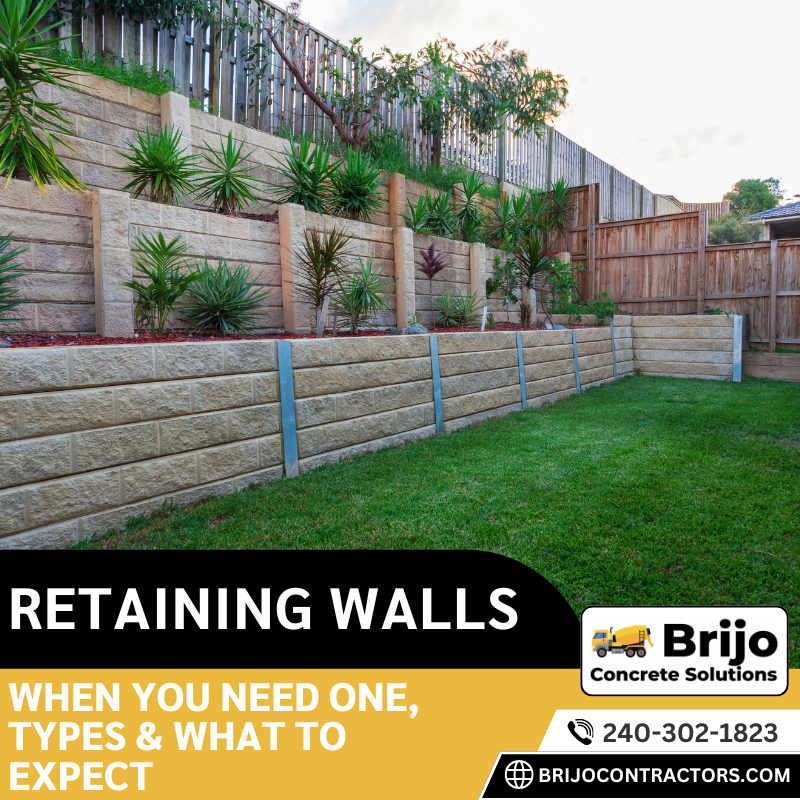
Tiered retaining walls can create distinct zones in your yard — a level upper area for dining, a mid-level garden bed, and a lower space for a fire pit or pool area. They're also a natural way to define planting beds, frame a patio, or add visual depth to a flat or awkward lot.
This is where retaining wall projects often overlap with our hardscaping and landscaping services. Many of our clients start with a wall to solve a grading problem and end up redesigning the entire outdoor space around it — adding a patio, built-in seating, landscape lighting, or new plantings. When one contractor handles the full scope, every element works together and you avoid the headaches of coordinating multiple crews.
Get Started with a Free Estimate
The earlier you address a retaining wall issue, the simpler and more affordable the solution tends to be. Whether you're dealing with erosion, drainage problems, or a yard that's not living up to its potential, we're here to help. Request a free estimate today and mention promo code 123-POUR to get started. You can also read our reviews to see what our clients have to say about working with Brijo Concrete Solutions.
"I was looking to have my front walkway refurbished and a concrete pad fixed in my backyard and BRIJO did a fabulous job. The work was done quickly and efficiently. The gentleman gave me a very reasonable quote and I'm looking forward to working with them again on future projects."
— Anitra Washington
Frequently Asked Questions About Retaining Walls
How do I know if I need a retaining wall or just better drainage?
It depends on the root cause. If water is pooling because of poor grading on relatively flat ground, a drainage solution alone might be enough. But if you're dealing with a slope that's actively eroding, soil pushing against a structure, or a grade change of more than a couple of feet, a retaining wall is likely the right fix. In many cases, the best solution involves both — a retaining wall with a properly engineered drainage system built into it. A site assessment will tell you exactly what your property needs.
How tall can a retaining wall be?
There's no hard limit, but wall height affects the engineering, permitting, and cost. Most residential retaining walls fall in the two- to six-foot range. Walls over four feet in Maryland typically require engineered plans and a building permit. For larger grade changes, we often build tiered walls — two or more shorter walls with terraced space between them — which distribute the load more effectively and look better too.
How long does a retaining wall last?
That depends almost entirely on the materials and how it was built. A properly constructed concrete or stone retaining wall with good drainage can last 50 years or more. Concrete block walls typically last 30 to 50 years with minimal maintenance. Timber walls have the shortest lifespan — usually 10 to 20 years before they start to deteriorate. The single biggest factor in longevity is drainage. A wall without proper drainage behind it will fail years or even decades before it should.
Do retaining walls need maintenance?
Very little, if they were built correctly. You should keep an eye out for any signs of leaning, cracking, or water seeping through the face of the wall, and make sure the drainage outlets stay clear of debris. Beyond that, an annual visual inspection is usually all it takes. Stone and block walls may occasionally need a joint re-sealed or a cap stone reset, but these are minor fixes. The best maintenance strategy is building it right the first time.
How much does a retaining wall cost?
Cost varies widely depending on the wall height, length, material, and site conditions. A small timber wall might start in the low thousands, while a large engineered poured concrete wall can be a significant investment. Concrete block and natural stone fall somewhere in between. The biggest cost drivers are the total wall area, the amount of excavation required, and whether drainage or permitting adds complexity. We provide detailed, transparent estimates so you know exactly what you're paying for — request a free estimate to get a number specific to your project.
Can a retaining wall increase my property value?
Yes — in two ways. First, it protects your property from erosion and water damage, preserving the value you already have. Second, it can create usable outdoor space where there wasn't any before, which is a real selling point for buyers. A well-designed retaining wall that's integrated with quality hardscaping or landscaping can deliver a strong return on investment, especially in Maryland's competitive housing market.
Why shouldn't I just build a retaining wall myself?
For a very small, low wall — under two feet with no real structural load — a DIY approach can work if you know what you're doing. Beyond that, the risks add up fast. Improper drainage is the most common failure point, and a collapsed retaining wall can cause serious property damage and create a safety hazard. There's also the permitting question — unpermitted walls can create problems when you go to sell your home. A professional installation costs more upfront but saves you from expensive repairs and rebuilds down the line.
Related Services

Why Is Hardscaping a Smart Investment?
Hardscaping offers some of the highest returns of any outdoor improvement project. Not only do these features increase your home’s value, but they also enhance your quality of life while you live there. They’re low-maintenance, weather-resistant, and built to last—especially when installed by professionals like the team at Brijo Concrete Solutions.
We proudly serve the Baltimore metro area – including all surrounding areas, offering custom hardscape design and installation with a reputation for clean job sites, fast timelines, and expert craftsmanship. Whether you’re preparing your home for sale or creating the outdoor space of your dreams, we’re here to help.
Ready to Boost Your Property’s Value?
If you’re thinking about adding a patio, walkway, retaining wall, or custom firepit to your property, Brijo Concrete Solutions is ready to turn your ideas into a reality. Our free estimate process is fast and easy—just mention promo code 123-POUR when you contact us.
Let’s create a space that’s beautiful, functional, and built to last.
Reviews and Testimonials
See what people are saying about our services – read authentic testimonials from real clients!